

The Pride Parade is a celebratory event in Toronto, closely linked to the city’s rich, progressive history of its queer community. It all began with small gatherings of dedicated activists fighting for the right to love and be recognized. Today, it is a massive parade that commands significant attention, as every participant has walked a difficult path. More at torontoski.
The First Parades. Who Organized the Gatherings?
In 1970, the gathering was organized by Toronto’s first queer activist organizations – the University of Toronto Homophile Association (UHTA) and the Community Homophile Association of Toronto (CHAT). The first gay parade in Toronto took place on August 1, 1971, at Hanlan’s Point as a charitable event to raise funds for activists heading to Ottawa for a march on the second anniversary of decriminalization. The newspaper Body Politic was also established. On July 9, 1972, the second annual Pride Parade was held as part of a series of events for the first “Equality and Pride Week.” It included a festival, a film night, Pride dances, a rally, and a march to Queen’s Park. Activists also submitted a memorandum to the Government of Ontario.
Toronto’s first Pride celebration occurred just three years after the Stonewall riots in New York City in June 1969 – an event that launched the gay liberation movement. It was a modest affair – a picnic on the Toronto Islands.
Scaling Up. An Exhibit of Articles from The Canadian Encyclopedia
Within a few years, thousands of people began attending the annual Pride parade, and by 2011, over 1.2 million people participated in Pride Toronto. During WorldPride 2014 in Toronto, the fourth WorldPride and the first in North America, an even larger crowd gathered.
However, as noted, many changes have occurred since the Stonewall riots. The lesbian, gay, bisexual, and transgender (LGBT) community in Canada has made significant progress towards general acceptance and legal equality. The shifts in health care, adoption rights, and marriage rights were particularly noticeable. Furthermore, LGBT artists have become leaders in contemporary culture – from literature and visual arts to theatre and film.
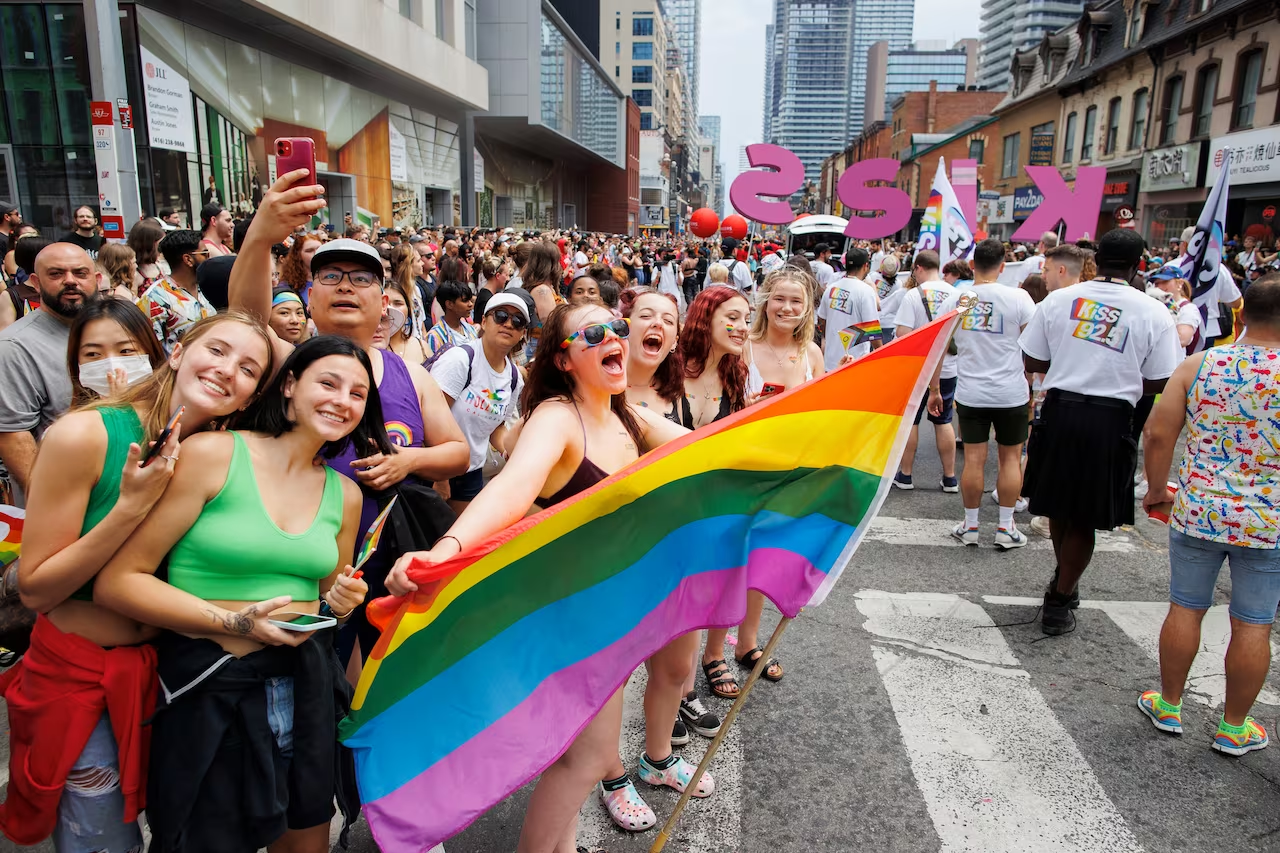
In honour of Pride, The Canadian Encyclopedia (an authoritative source of knowledge) created an exhibit of articles dedicated to related issues, including the history of LGBT rights in Canada, a memoir about Toronto’s queer theatre scene by renowned playwright Sky Gilbert, the history of queer culture in Canada, and an article exploring the topic of transgender people and the Canadian health care system.
Transgender Rights in Canada and Toronto
Transgender rights in Canada continue to be at the forefront of the fight for equality. Currently, only a few provinces – Ontario, Manitoba, Nova Scotia, and the Northwest Territories – include gender identity in their human rights codes. Meanwhile, other provinces have ruled that it is a protected category under existing legislation.
Transgender activists have also fought to simplify the process of changing one’s sex on official documents without requiring surgery. The Human Rights Tribunal of Ontario struck down the surgery requirement in 2012, and the British Columbia legislature and an Alberta court did the same in 2014. The Government of Manitoba has also expressed a similar intent. With the gradual increase in rights for LGBT Canadians, the focus for many has shifted to the situation of gays and lesbians abroad who face more brutal persecution. Such cases have become an important focus for many modern Pride celebrations. This culminated in 2014 when Toronto hosted the fourth WorldPride event, which included a week-long human rights conference. That week in Toronto was not without controversy, as the event’s growth in recent years has led to accusations that it has become an overly commercial enterprise, dependent on corporate sponsors and business interests, to the detriment of local community groups and political activism. Although the Pride Parade is officially defined as an inclusive event for all races, communities, and gender identities, many groups within the LGBT community have stated that their events, communities, and issues are being increasingly marginalized in favour of a commercialized agenda.
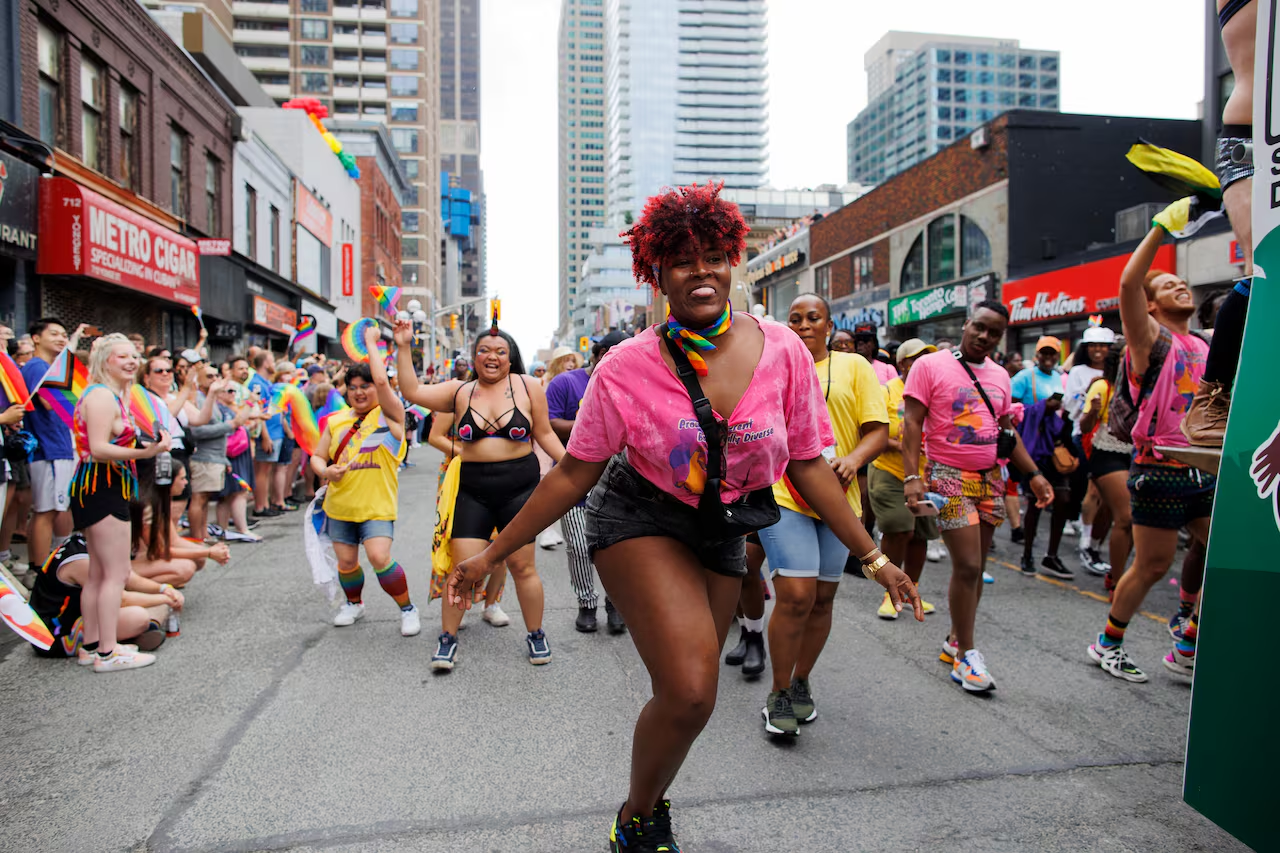
For example, many smaller community organizations have stated they can no longer afford the increased fees required to participate in the parade with their own contingent, which is increasingly filled with corporate floats from advertising sponsors. Many LGBTQ small business owners, who historically relied on fair booths during Pride Toronto for advertising, have also noted they cannot afford the increased costs to participate in the fair area. Back in 2010, the Blackness Yes! committee, which organizes the annual Blockorama dance party for LGBTQ people of colour, began to raise alarms as their program was being forcibly moved from its traditional spot—a stage opposite the Wellesley subway station—to unsuitable locations, such as a small parking lot in front of a beer store on Church Street, the dance-unfriendly area of George Hislop Park, or a too-small gazebo in Alexander Park. In 2015, Pride Parade organizers were forced to withdraw trademark applications for the phrases “Dyke March” and “Trans Pride,” which refer to events organized by external groups during Pride celebrations, in response to concerns from lesbians and transgender people that their issues and needs were not receiving proper attention.