

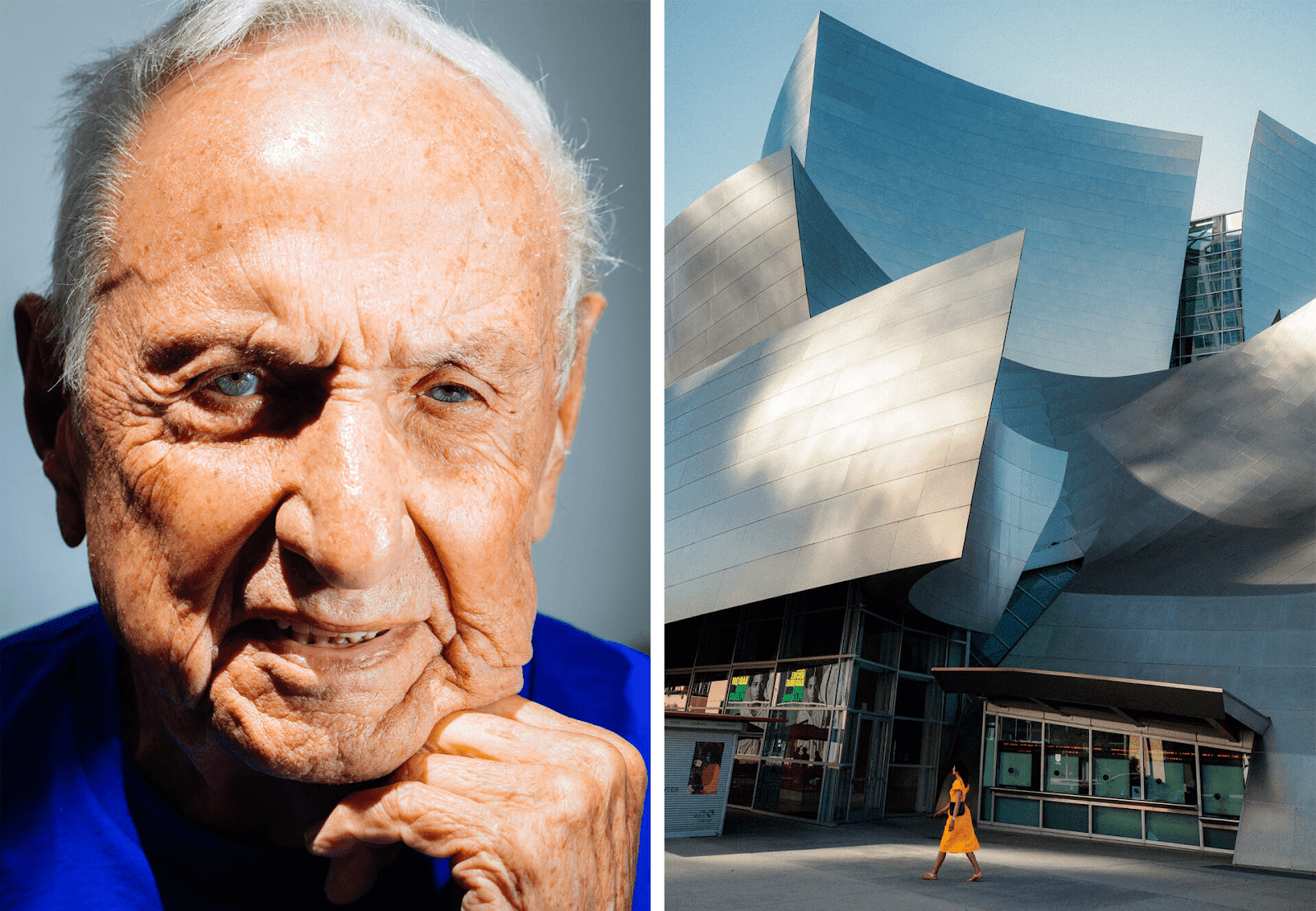
Frank Gehry, a talented Canadian architect, gained fame for his fascination with postmodern design. His works, such as the Walt Disney Concert Hall and the Guggenheim Museum in Bilbao, Spain, stand as global landmarks. Below is a detailed exploration of his life and career. Read more on torontoski.
Childhood and Education
Frank Owen Gehry, born Frank Owen Goldberg on February 28, 1929, in Toronto, came from a Polish-Jewish family. A highly creative child, he was deeply sensitive to details and often built imaginary houses and cities using materials from his grandfather’s hardware store.
In 1949, Gehry moved to Los Angeles, where he worked a variety of jobs while studying in college. He graduated from the University of Southern California’s School of Architecture. Around that time, Gehry changed his surname from Goldberg to Gehry in an effort to avoid antisemitism. Seven years later, Gehry and his first wife, Anita Snyder, moved to Massachusetts, where he fulfilled another dream by enrolling in Harvard’s Graduate School of Design. However, Gehry eventually dropped out of Harvard and divorced Anita, with whom he shared two daughters. In 1975, Gehry married Berta Isabel Aguilera, with whom he had two more children.
The Start of an Architectural Career
After leaving Harvard, Gehry returned to California, where he gained attention by launching his Easy Edges furniture line. These furniture pieces, produced between 1969 and 1973, were crafted from layers of corrugated cardboard.
Despite the success of Easy Edges, Gehry’s passion remained in architecture. He used earnings from the furniture line to renovate his family home in Santa Monica. The reconstruction featured a contemporary bungalow encased in chain-link fencing and corrugated steel, with angular skylights dividing the structure. This avant-garde design captured the attention of the architectural world and propelled Gehry’s career to new heights. By the 1980s, he was regularly designing projects across Southern California.
A Grand Career in Architecture
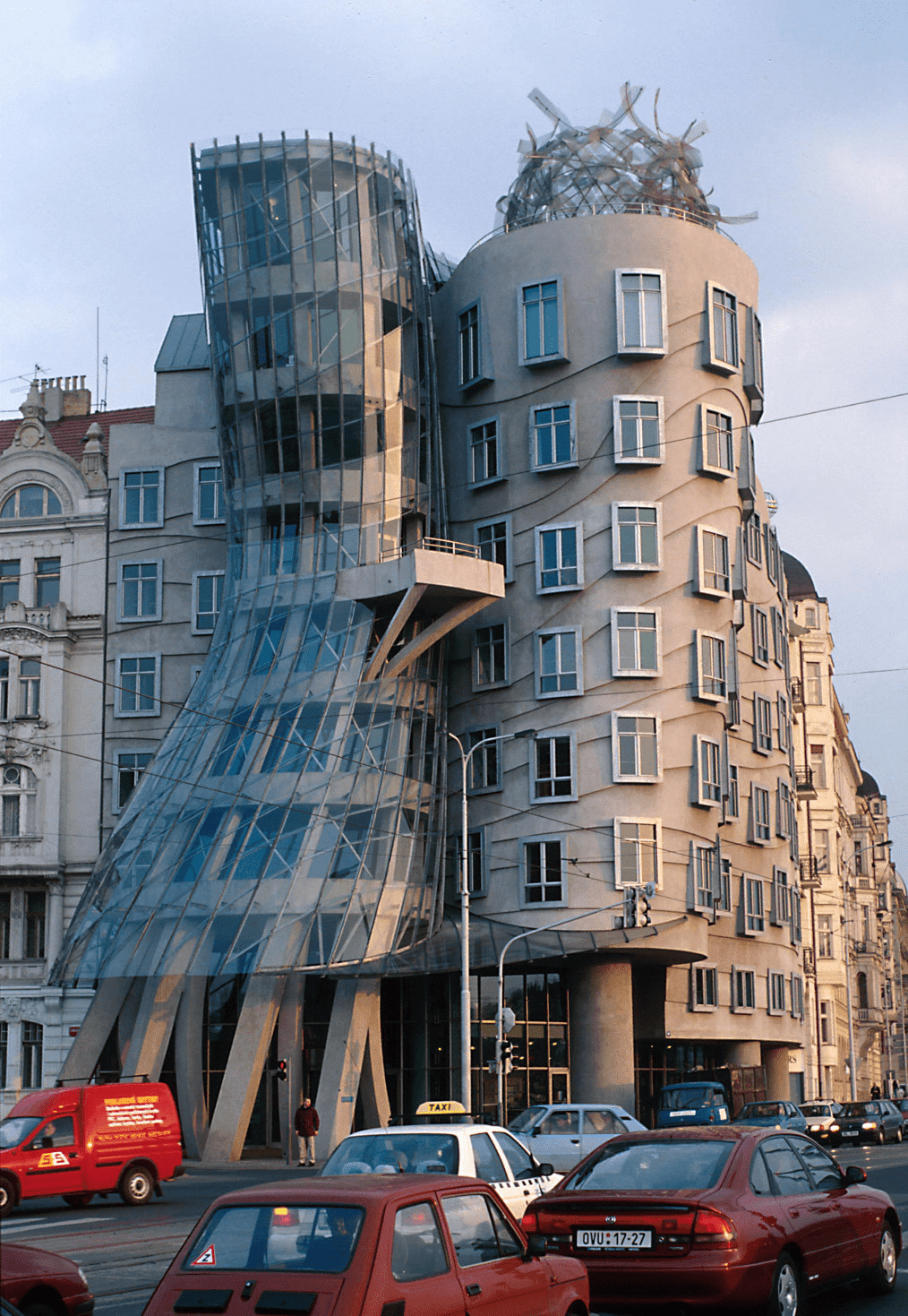
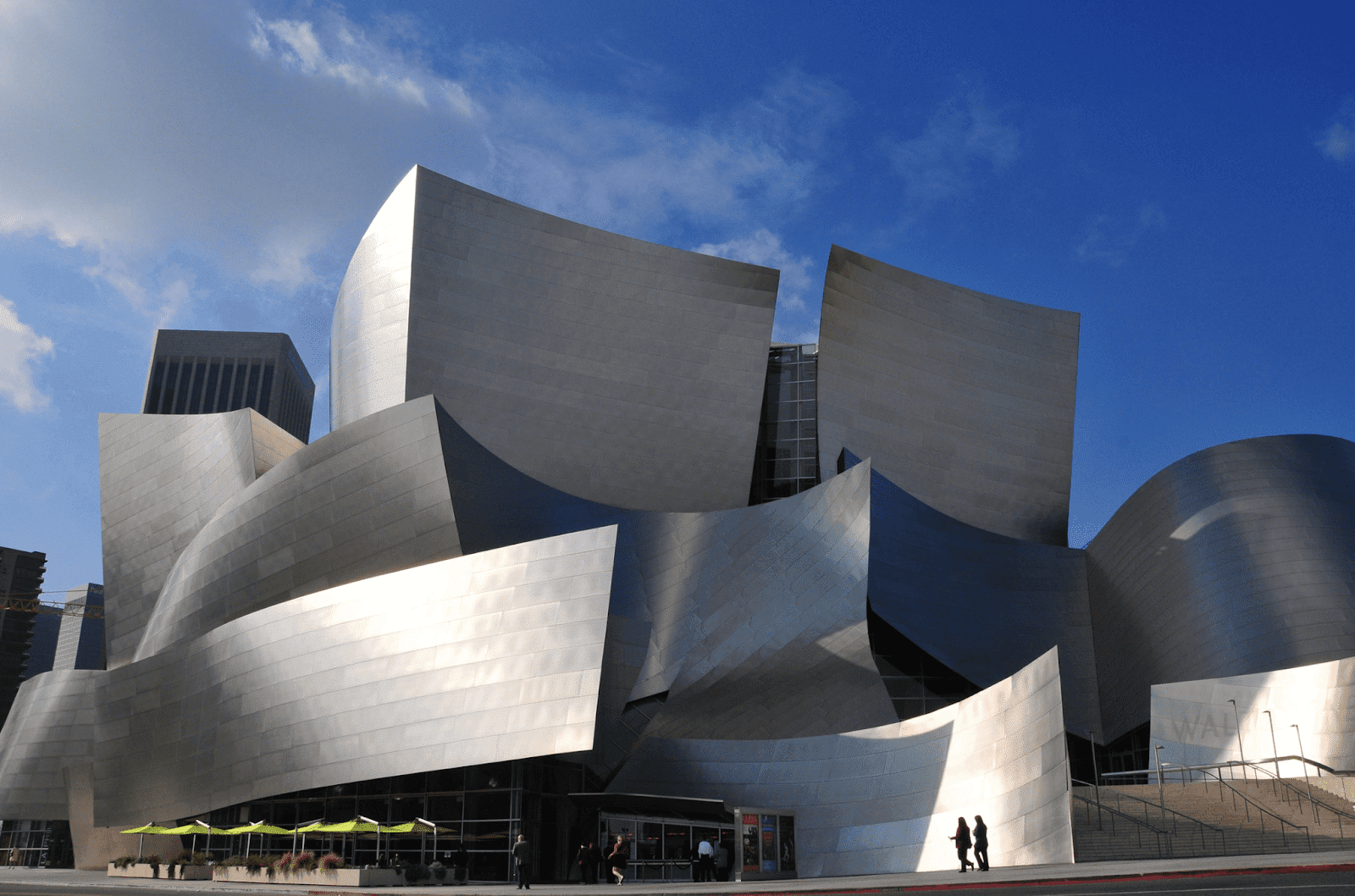
As Gehry’s reputation grew, so did the scale of his projects. His monumental works, including the Walt Disney Concert Hall in Los Angeles, the Dancing House in Prague, and the Guggenheim Museum in Bilbao, Spain, became tourist attractions in their own right. In 2011, Gehry returned to residential design, creating the 8 Spruce Street skyscraper in New York and the Opus Hong Kong tower in China.
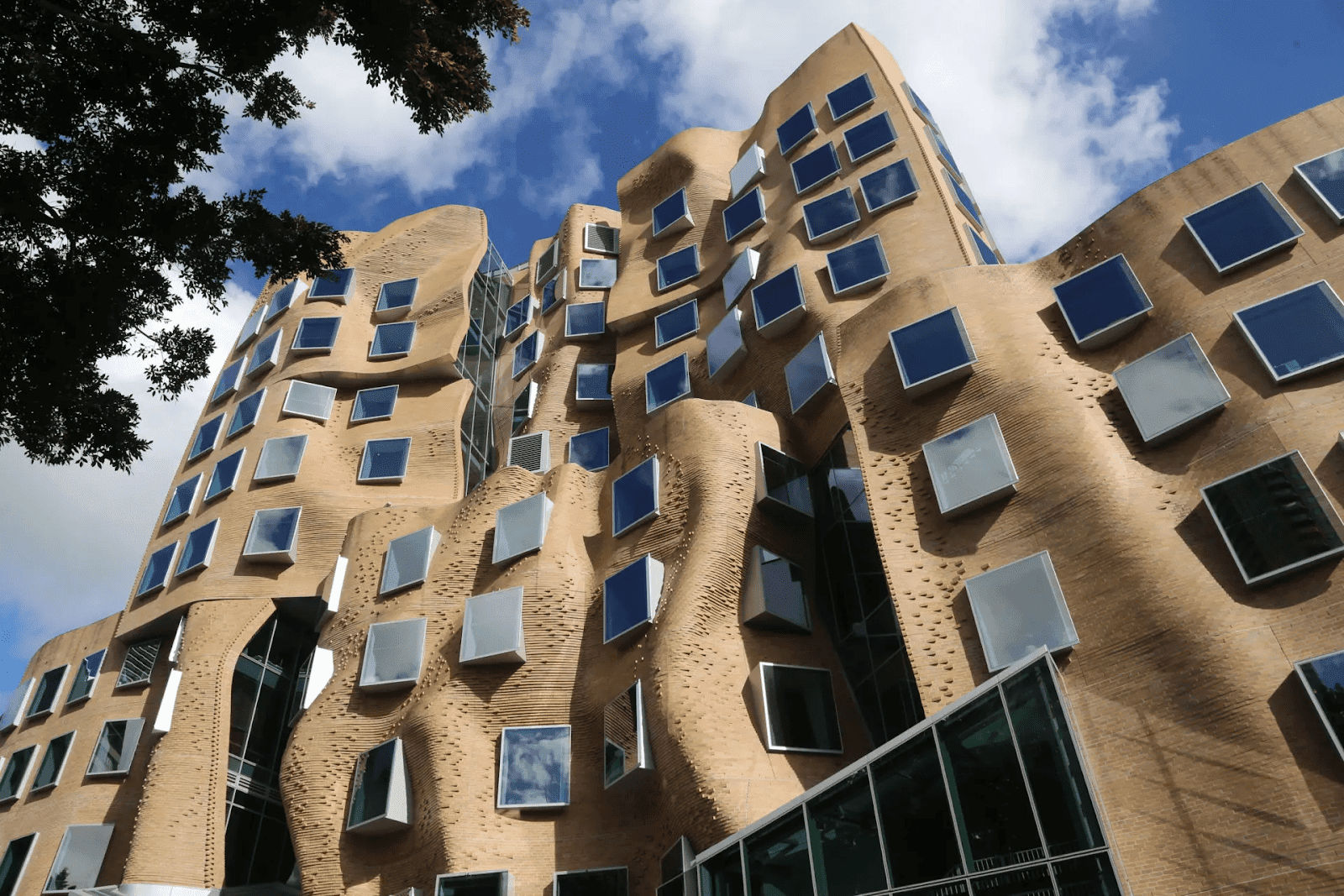
His Santa Monica house is an example of deconstructivism, a post-structural aesthetic that challenges conventional architectural paradigms. Gehry’s works, including the house, often disrupt modernist ideals by rejecting the principle that “form follows function.” Instead, his designs emphasize a raw, imperfect, and sometimes brutal beauty, which has made him one of the most recognizable architects of his era.
Gehry’s choice of unconventional materials, such as corrugated metal, reflects his philosophy of creating unique and bold designs. However, critics have accused him of neglecting practical urban concerns. One of the most notable criticisms involved the Walt Disney Concert Hall, which exceeded its budget by $170 million, leading to expensive legal disputes.
Academic Work, Media Presence, and Other Projects
Throughout his career, Gehry held professorships at Columbia University, Yale University, and the University of Southern California, serving on USC’s School of Architecture board as well. He won the prestigious Pritzker Prize in 1989, an annual award honoring architects whose work demonstrates exceptional talent, vision, and dedication to improving humanity through architecture.
Gehry also appeared in popular culture, including The Simpsons, and featured in Apple commercials. In 2005, director Sidney Pollack created the documentary Sketches of Frank Gehry, which highlighted the architect’s work and legacy.
Recent and ongoing projects include the Guggenheim Museum in Abu Dhabi, Facebook’s new California headquarters, and the Dwight D. Eisenhower Memorial in Washington, D.C. However, the memorial faced delays due to objections from Eisenhower’s family, who criticized Gehry’s original design for failing to adequately reflect Eisenhower’s accomplishments. Gehry revised the design, incorporating a portrayal of Eisenhower as a leader, but disagreements persisted, with critics citing concerns over complexity and cost.
The Eisenhower Memorial project sparked further controversy in 2013 when U.S. Congressman Rob Bishop proposed a bill to cancel much of its funding and restart the design competition. Despite the challenges, Gehry remains one of the most influential architects of his time. Often referred to as a “starchitect,” Gehry rejects the term. In a 2009 interview with The Independent, he explained, “I’m not a starchitect. I’m just an architect.” He added that while many designers are technically and financially irresponsible, he strives for excellence in his work.
In 2016, President Barack Obama awarded Gehry the Presidential Medal of Freedom, cementing his legacy as a groundbreaking architect.
Contributions to Architecture and Awards
Frank Gehry has defied architectural norms for over five decades. His creations, from the Guggenheim Museum in Bilbao to the Louis Vuitton Foundation in Paris, continue to inspire with their innovative and awe-inspiring designs.
Gehry has received numerous accolades, including the 1989 Pritzker Prize, the 1992 Praemium Imperiale, the 1998 National Medal of Arts, and the 1999 Gold Medal from the American Institute of Architects. In 2002, he earned the Gold Medal for Arts and Letters from the American Academy of Arts, and in 2016, he received the Presidential Medal of Freedom.
With 33 notable structures in Toronto alone, Gehry has left an indelible mark on the global architectural landscape. His work is a testament to creativity, innovation, and a refusal to adhere to traditional design paradigms.
Sources: