

Toronto has always known how to surprise the world. It’s a city where cultures collide, bold ideas are born, and trends are set before sweeping across the globe. One of the most remarkable success stories to emerge from the streets of our metropolis is that of Club Monaco Canada. Today, it’s an international powerhouse in the affordable luxury segment, boasting hundreds of stores from New York to Seoul. Yet, few realize that it all started on a sweltering September day in 1985, right in the heart of Toronto – as reported by torontoski.info.
A Scorching September in ’85: Club Monaco’s Bold Debut on Queen Street West
On September 3, 1985, Toronto was hit by an intense heatwave. However, the atmosphere on Queen Street West was sizzling for an entirely different reason. Outside building number 403, a massive crowd had formed. Everyone was eagerly waiting for the doors to open at a new store with an intriguing name—Club Monaco—and a mysterious tagline: “Great New Ideas from Alfred Sung.”
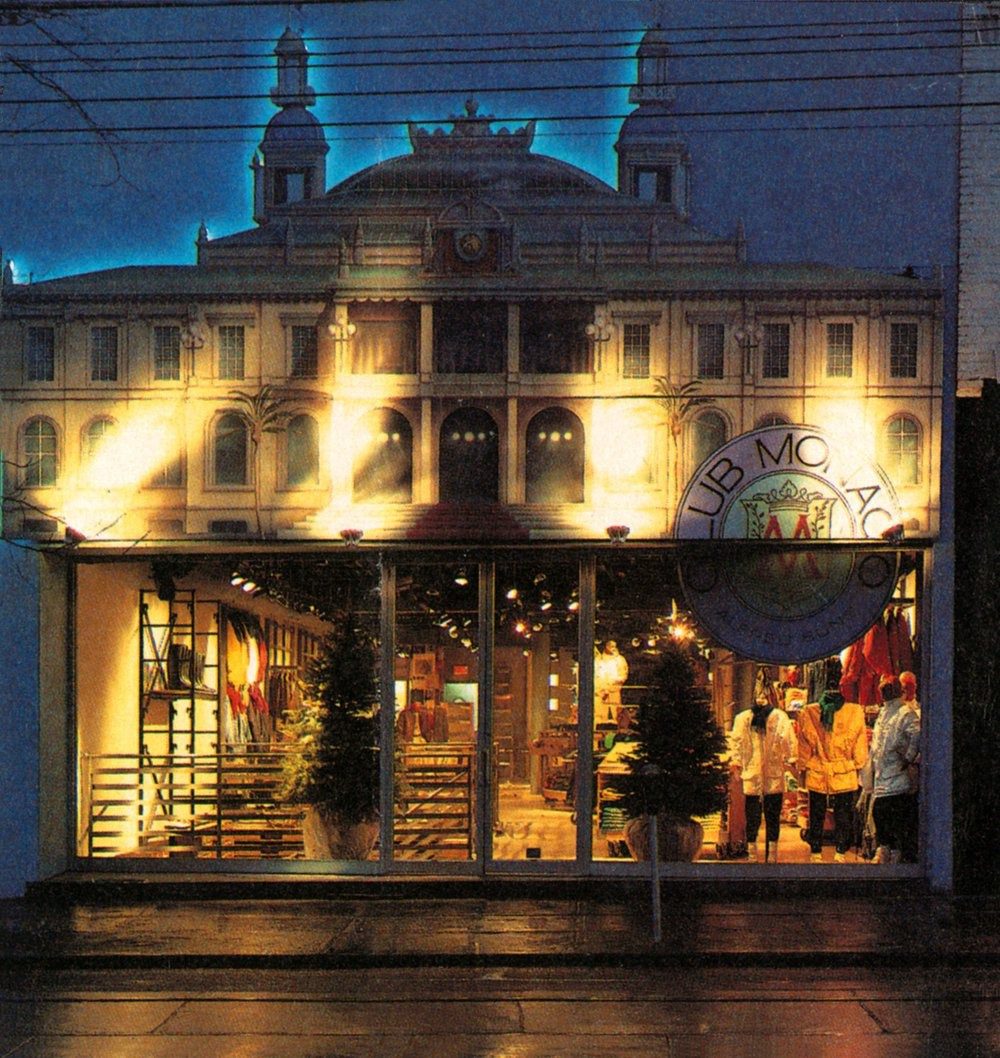
Leading up to the grand opening, the entire building had been wrapped in a massive canvas designed to look like a brown kraft paper parcel tied with twine, looking as if it had been shipped to Toronto straight from the Principality of Monaco. When the curtain finally dropped, it revealed a hand-painted replica of the world-famous Monte Carlo casino facade. It was a marketing masterstroke.
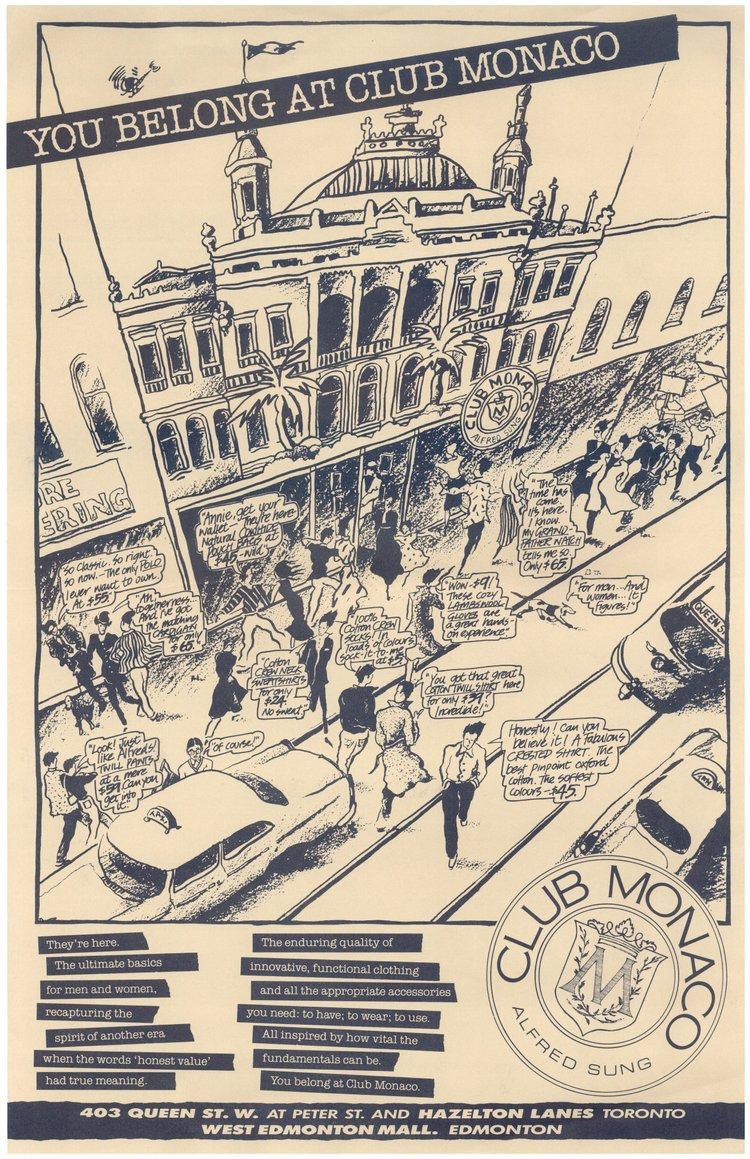
Back then, the Queen Street West neighborhood was the epicenter of Toronto’s punk scene and underground counterculture. Introducing a polished, somewhat preppy, high-end store here was a defiant move. Behind this ambitious project were visionary Canadian entrepreneurs—brothers Joe and Saul Mimran—alongside Alfred Sung, Canada’s most celebrated designer at the time.
That day, the city’s creative elite turned out in full force. The crowd included young interior designers George Yabu and Glenn Pushelberg (now the legendary duo Yabu Pushelberg), design assistant Michelle Lloyd, visual stylist Christine Ralphs, publicist Helen Duma, and, of course, Alfred Sung himself, quietly smiling in a flawless white suit.
A Revolutionary Concept: “Better Basics” and Co-ed Shopping
To truly understand Club Monaco’s phenomenal success, one must look back at 1980s fashion. It was an era dominated by neon colors, wild backcombed hair, massive shoulder pads, and loud hairsprays. Against this backdrop, Club Monaco’s collection felt like a breath of fresh air.
The founders based their brand on the concept of “Better Basics.” The idea came about purely by chance when the designers came across a premium fabric sample stamped with the word “Monaco.” They instantly recognized what modern city dwellers were actually missing: simple, impeccably tailored clothing in neutral tones that could be effortlessly mixed and matched in seconds.
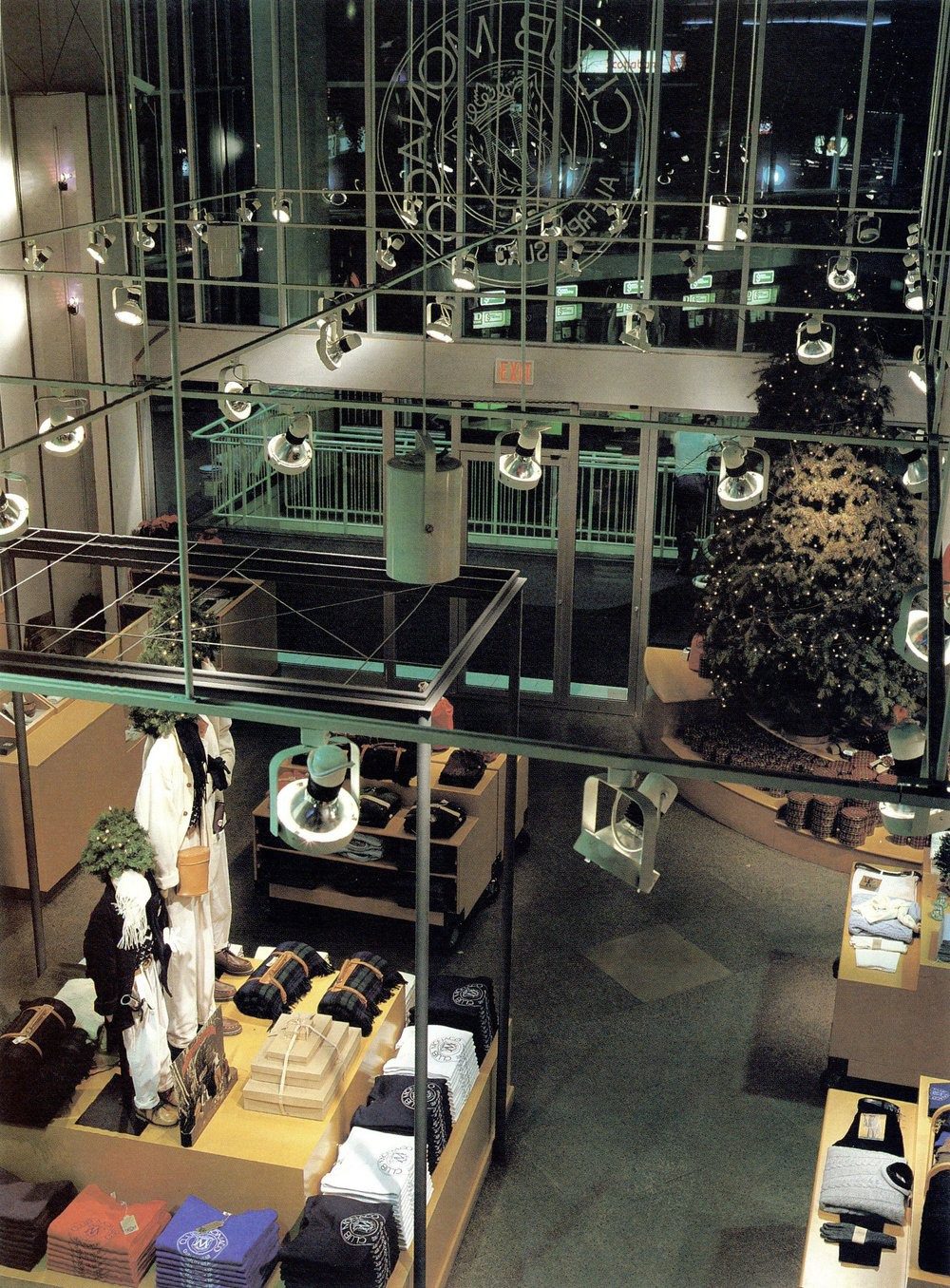
The store’s layout was revolutionary for its time. First, the interior design by Yabu Pushelberg rejected the standard luxury tropes of the era. Instead of gold trim and velvet, they opted for minimalist, unpainted MDF furniture (where wood simply looked like wood) and a genuine boxing ring right in the middle of the sales floor, which served as a runway for the mannequins.
Second, it was the very first store where men and women could shop together in the exact same space. Initially, the creators pitched this co-ed retail concept to the famous Eaton’s department store as an in-shop boutique format. However, Eaton’s conservative management turned them down, completely skeptical that men and women would want to shop alongside one another. The Mimran brothers refused to back down and decided to open their own standalone store. They didn’t just guess right—they leaped ahead of their time.
The debut Fall 1985 collection featured minimalist yet incredibly stylish essentials: a grey wool car coat, a genuine cowhide leather backpack, lambswool sweaters in 12 distinct colors, pleated trousers, and shirts featuring an embroidered logo.
But the true showstopper—and the ultimate symbol of late-’80s Canadian fashion—was the signature sweatshirt with the embroidered Club Monaco crest. Sweatshirts, which had previously been dismissed as strictly athletic or loungewear (“anti-fashion”), were elevated by Club Monaco into casual chic essentials. The brand perfectly captured the European street style of Paris, London, and Milan, and infused it with an effortless Canadian laid-back vibe.
As Alfred Sung himself put it:
“Club Monaco is the way I love to dress myself: very casual, comfortable clothes. I believe in simple shapes. I’ve always loved classics; they give you confidence if they are simple but beautifully constructed.”
Rapid Expansion and Tailored Retail Spaces
Success came overnight. Over the next four years, Club Monaco locations opened at a staggering rate of one per month. Beyond the flagship on Queen Street, the brand launched spots in Hazelton Lanes and the West Edmonton Mall.
Crucially, Club Monaco never felt like a cookie-cutter franchise. Every single store boasted its own unique personality that mirrored the vibe of its neighborhood. For example:
- The store in Toronto’s resort-like neighborhood, The Beach, featured a Cape Cod aesthetic—complete with a lifeguard tower under a glass dome and a custom juice bar.
- The massive, nearly 7,000-square-foot location inside the Eaton Centre later featured its own in-store restaurant and a fresh flower shop.
The brand’s apparel was sold exclusively through its own monobrand retail stores, creating a sense of curation and exclusivity that naturally drew in young urban intellectuals.
In 1987, fueled by this explosive growth, the Monaco Group decided to split the business. The ALFRED SUNG label branched off to scale independently, while Joe Mimran focused 100% of his efforts on expanding Club Monaco.
The Ralph Lauren Era: Taking Club Monaco Global
In 1999, a major deal sent shockwaves through the fashion industry: American retail giant Polo Ralph Lauren acquired Club Monaco for $56 million. While the corporate headquarters transitioned to New York, the brand’s Canadian roots and distinctive aesthetic remained fiercely protected. Ralph Lauren recognized its unique market position and granted the label creative independence, respecting its minimalist DNA, superior quality, and intellectual style.
Under Ralph Lauren’s corporate umbrella, Club Monaco transformed into a truly global lifestyle brand. The store footprint expanded past 140 locations worldwide, welcoming shoppers across the UK, Sweden, China, Hong Kong, Singapore, Saudi Arabia, and the UAE. Club Monaco firmly established itself as a leader in affordable luxury, offering silk dresses, premium cashmere knitwear, and structured tailored coats at prices well below traditional luxury fashion houses.

A Return to Roots: Coffee, Books, and Pop-Ups
Modern retail has faced serious headwinds due to the rise of e-commerce. Many of Club Monaco’s direct competitors (such as J.Crew and Banana Republic) have run into heavy financial trouble. Club Monaco, however, adjusted beautifully by leaning back into its foundational philosophy—curating a lifestyle rather than just selling clothes.
In 2013, the brand reimagined its iconic Fifth Avenue flagship store in New York City by integrating a Toby’s Estate Coffee bar and a curated bookshop run by NYC’s legendary Strand Bookstore. It was a nostalgic nod to the original Toronto store design, where shopping seamlessly blended with leisure and community spaces.
Today, the brand continues to thrive on high-profile collaborations and experiential pop-up shops. They frequently team up with niche labels, from the Parisian fragrance house Diptyque to the bespoke skincare brand The Buff. Club Monaco has even set up chic summer pop-ups at trendy boutique hotels—like Ruschmeyer’s in Montauk—treating guests to branded beach towels and tote bags that instantly became viral Instagram hits.
In 2021, Ralph Lauren sold Club Monaco to Regent LP, a private equity firm based in Los Angeles. This transition opened a fresh chapter for the heritage brand, giving it the agility to navigate digital-first retail environments, revamp its online presence, and launch fresh, curated collections.
A Toronto Legacy That Endures
Today, Club Monaco stands as a mature, confident, globally recognized brand. Yet, the heart of its narrative will always belong to Toronto.
If you take a stroll down Queen Street West today, you will still find that very same building at number 403. The Club Monaco storefront still occupies the space, serving as a permanent reminder to locals and visitors alike of how a bold vision by a handful of Canadians disrupted the global fashion industry.
It’s a powerful reminder that true classics never go out of style, and that a genuine dedication to creating “better basics” can pave a path from the cozy streets of Toronto right onto the world’s most prestigious fashion runways.