
As our society and civilization progress, it is a mistake to view science as a predominantly “male domain,” writes torontoski.info. Such a perspective is fundamentally flawed and outdated. Women are continually proving their capabilities and asserting their presence in various professional fields, achieving remarkable career milestones.
Gone are the days when women’s opinions were dismissed as overly elaborate or naïve. Modern women hold significant positions and often rival their male counterparts in various domains. Among the many influential critics, sociologists, political scientists, and consultants, a growing number of women command the attention and respect of audiences worldwide.
One such figure is Margaret Olwen MacMillan, a Canadian historian and professor who has built an extraordinary academic career and is a highly regarded expert in history and international relations.
From a Family of Achievers
Margaret MacMillan was born on December 23, 1943, into a family of accomplished individuals. Her maternal grandfather, Thomas Carey Evans, was a major in India’s medical service. Her maternal great-grandfather was David Lloyd George, the Prime Minister of the United Kingdom during World War I.
Education
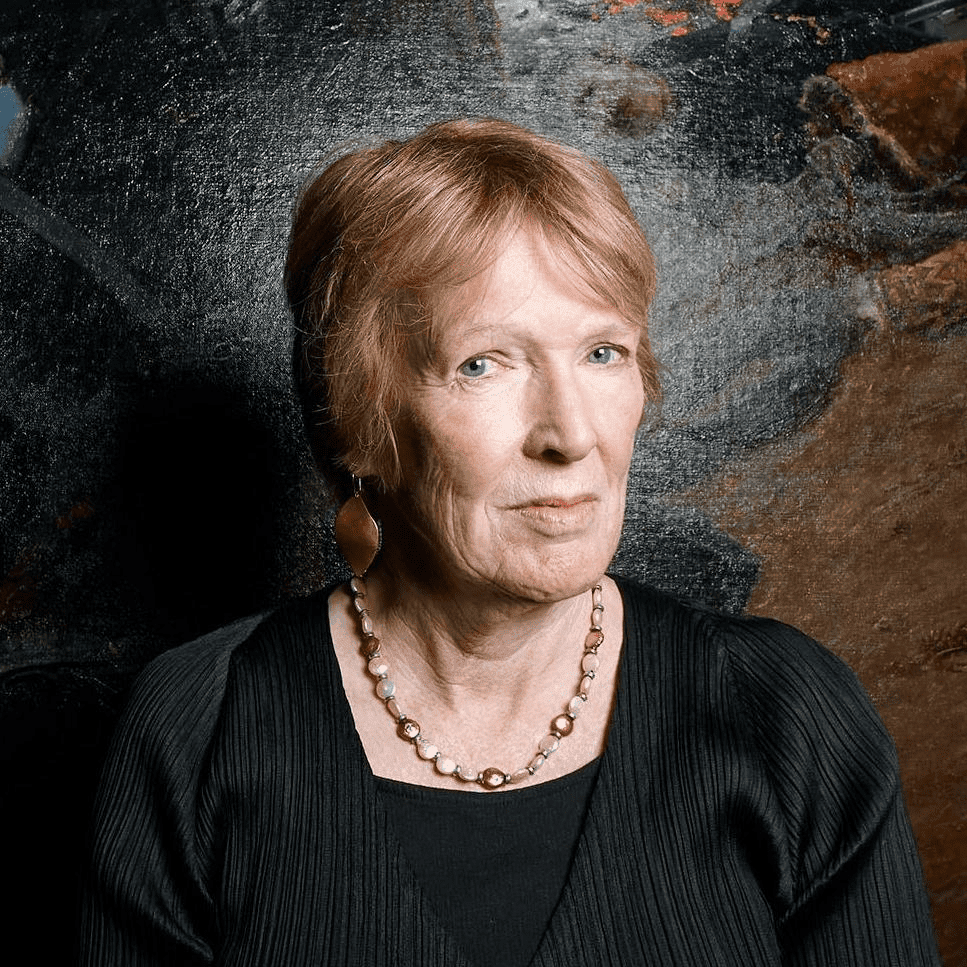
Margaret earned her bachelor’s degree in history from the University of Toronto and another in politics. She later pursued her doctorate at St. Antony’s College, Oxford, focusing her thesis on the social and political views of the British in India. She completed this significant work in 1974.
Academic Career
From 1975 to 2002, Margaret taught history at Ryerson University in Toronto, where she also served as department head for five years. Between 2002 and 2007, she was the director of St. Antony’s College, Oxford, and taught international history at Oxford University.
Numerous Publications
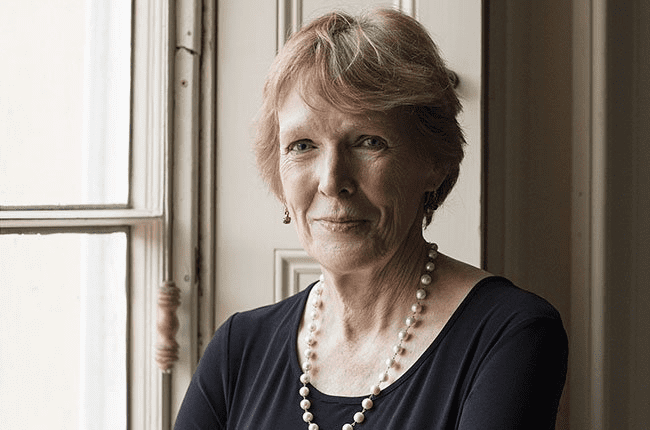
Margaret has authored a wide array of articles and reviews addressing Canadian and international public affairs. She also co-edited books on Canada’s international relations and served as part of the editorial board for the International Journal, published by the Canadian Institute of International Affairs (CIIA), from 1995 to 2003.
Earlier in her career, she was a member of the CIIA’s National Board of Directors.
Research Focus
Margaret’s research primarily covers the 19th and 20th centuries of the British Empire and 20th-century international relations. She has taught courses on the history of international relations and is a member of the European Advisory Board of Princeton University Press.
Most Notable Work
Margaret’s most acclaimed book examines the 1919 Paris Peace Conference as an effort to end war. This work earned the Cooper Prize and was recognized as a significant historical and political literary achievement. It also won the Hessell-Tiltman Prize, the Johnston Prize, and Canada’s Governor General’s Literary Award.
Awards and Honors
Margaret has served on boards such as the Canadian Institute of International Affairs, the Atlantic Council of Canada, the Ontario Heritage Foundation, and the Churchill Society for the Advancement of Parliamentary Democracy. She is a member of the Royal Society of Literature.
Her accolades include honorary degrees from Royal Military College, Ryerson University, and King’s University College. In February 2006, she was made an Officer of the Order of Canada.
In May 2018, Margaret received an honorary doctorate in literature from Memorial University of Newfoundland, followed by an honorary degree from The American University of Paris in 2019. In 2020, she became an honorary fellow of the Learned Society of Wales.
Interviews
Margaret is frequently cited in popular media, particularly on topics related to World War I. In 2014, she traveled to Sarajevo to commemorate the centenary of Archduke Franz Ferdinand’s assassination. There, she gave an interview discussing the 2014 Crimea crisis, Iraq, and tensions between Japan and China over the Senkaku Islands.
In September 2013, following the release of her book on World War I, she was invited to deliver a lecture at the Centre for Contemporary International History. Additionally, Margaret has contributed articles to The New York Times.
Controversial Essay
In December 2013, Margaret’s essay for the Brookings Institution highlighted globalization’s paradoxical effects. She argued that while globalization fosters localism and nativism, it also spreads radical ideologies, enabling fanatics to unite in pursuit of utopian societies.
Her solution was for Western leaders to focus on building a stable international order, united by a shared sense of danger to form coalitions willing to act collectively.
Social Advocacy
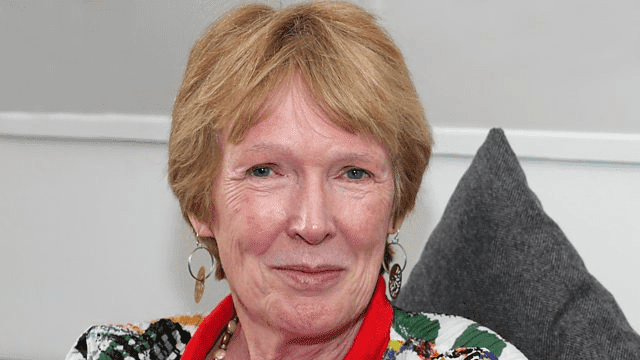
Margaret actively shares her views on social and global issues. Despite her busy academic schedule, she frequently uses her platform to advocate for her beliefs.
On the 10th anniversary of the 9/11 attacks, she penned an essay discussing the aftermath of these events and highlighted the secular nature of the Arab Spring revolutions.
In summer 2014, she co-signed a public letter opposing Scottish independence ahead of the referendum later that year.